

“I Think Democracy is a Really Radical Idea”: Astra Taylor on “End Times Fascism” and Finding a Political Home
Ryleigh Johnson | Sept. 15, 2026
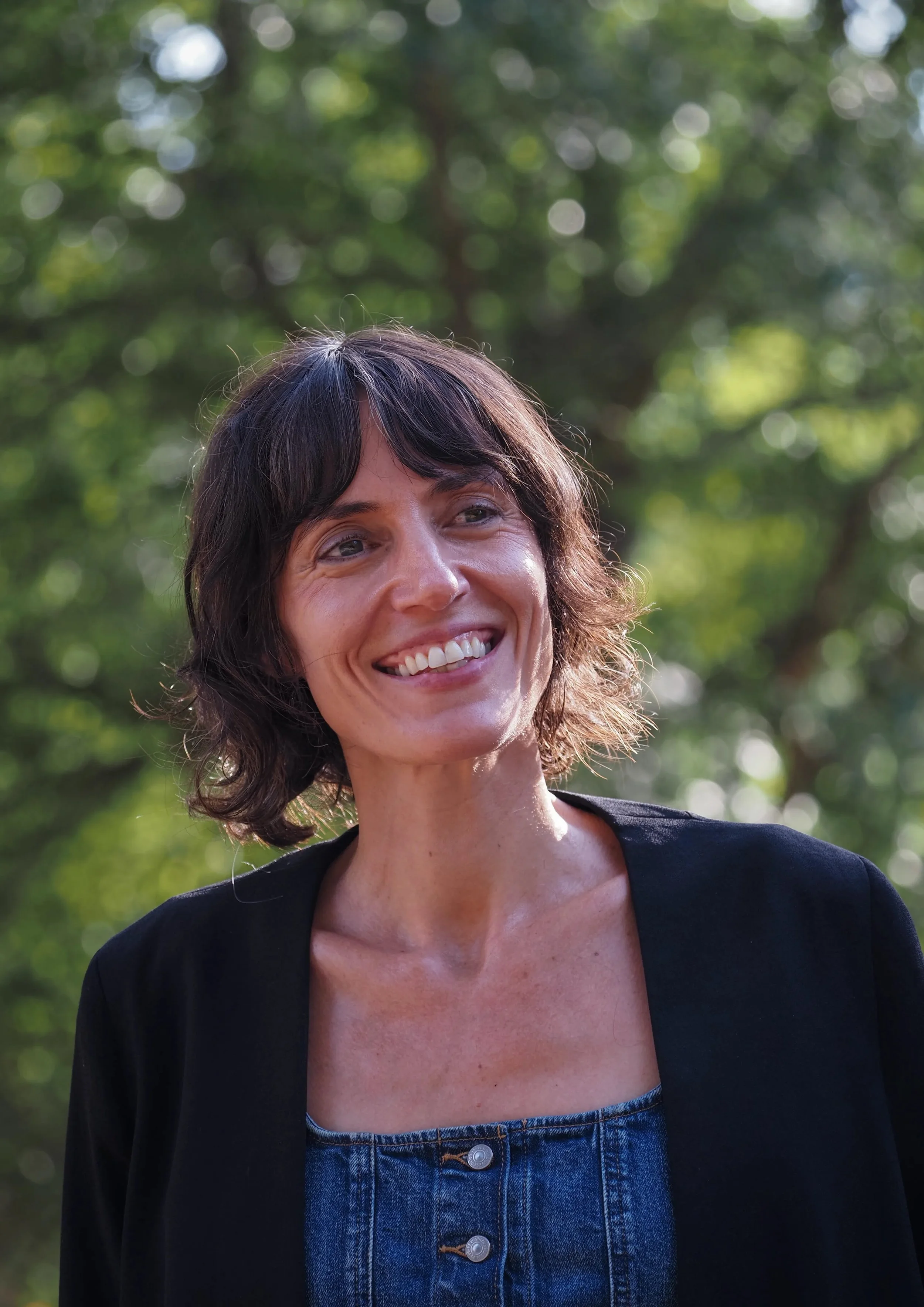
Astra Taylor poses for a photo on the Warren Wilson College campus on Sept. 9, 2026 in Swannanoa, N.C. (Echo/Sophia Strominger)
RJ: I was wondering if you could say a little bit more about how this interest of yours in democracy factored into the themes that you're exploring in [your] new book, [“End Times Fascism”].
AT: The latest book is about the intense radicalization of the far right in recent years. I don't think that the second Trump administration is the same as the first Trump administration, and I think there are real material reasons for why we're seeing a fascist-right rise around the world.
One is that we are exceeding real ecological limits. All of us just lived through a summer of intense heat domes, wildfires across Europe, mass death – I mean, 16,000 extra deaths in Europe in a single week because of heat fires. The largest mass evacuations in Europe since World War II because of fires, and a level of concentrated wealth that is actually almost impossible to get your mind around. We are entering the world of trillionaires and not billionaires, where single men can have the power to control politics, and where they have more money than the GDP of massive industrial countries. They're pushing AI with its promise of massive job loss and displacement, and even if those promises don't come true as they're describing them, mass confusion about what's true and what's false. The material conditions are changing.
Because we have not addressed these threats by taxing the rich, by investing in renewables at the scale we need, we're entering a phase where the consequences of that are kind of undeniable, even to people on the right. They foresee a world that's increasingly unstable, that's increasingly uncertain, and their response to that is definitely not to say, "Well, let's do some regulating. It's a public investment,” it's basically to say, "All right, let it rip, and we'll try to survive.”
The material conditions, in a way, demand the fascist ideology, because you need to be able to justify your own safety, your own security. It sure helps to go, "Well, I'm chosen by God,” or “I have the right genes. I'm smarter than everybody,” or “I'm rich, and therefore a eugenics of wealth sounds great to me,” or “I'm the right race.” We are in a kind of feedback loop where the more apocalyptic the conditions become, the more they actually embrace a kind of apocalyptic philosophy that's like, “I'm gonna make sure that I'm safe…”
Their vision of horror is not the chaos and the death and the suffering that they're unleashing on the human world; on the animal world; on our planet, but rather the prospect that their power might be dampened...Democracy is in their sights for for a multitude of reasons, because it it poses the threat of possibly constraining them and redistributing resources. That's part of why I think democracy is a really radical idea, and we see it in the fear that these fascists have of a more democratic future.
RJ: Something that I think about a lot is the old Infowars slogan, “There's a war on for your mind.” It sounds like what you're identifying is that people, on the right and the left, are on the same page [on things being] bad. Things feel existentially bad in a way that can't be denied. Now, the challenge is not to convince people that things are bad, but instead to ask them to [agree not to] choose just to save [themselves]; [to] lean into these democratic principles. Lean into solidarity. In your opinion, how would one go about cultivating that, even just person to person in conversations and relationships? How do you pull people back from the allure of just being like, “Screw everybody else?”
AT: There's different people we need to try to reach. There's people with very different worldviews, and there's people who have maybe just decided to put their head in the sand because it's too distressing to pay attention, or maybe they're kind of doomers and they're like, “Look, I don't think things can change. Look how powerful they are.” I think there's always different strategies based on who you're trying to reach.
The fundamental thing is, I think, we need to build solidarity across difference. We need to figure out how to get into alignment with people who are not exactly like us, and that means trying to hone first and foremost on basic issues of commonality. This is why my organizing is focused on indebtedness, because a whole bunch of people are broke. You can get people in a room talking about how they can't afford life, and then they're more open to hearing each other talk about other things, like maybe that they've experienced racism or sexism, or maybe they're be more open to this idea, of “Hey, actually, you wouldn't be so broke if you had a union.”
I'm a big proponent of organizing, of finding a political home, and not being a lone activist. No political home is perfect. There's not one organization that can do everything, but it's really important to be in formation with other people.
RJ: A commonality between your book about democracy and also what you're saying now is this idea of committing to things even when they're imperfect. Your organization that you choose to find a home in and commit to might not be perfect. Real democracy hasn't really ever existed, and it's also very imperfect, but imperfect things are still worth committing to. Do you think that there's a connection there between having this mindset of, “It's not perfect, but I'm gonna put my roots down and I'm gonna work at it and wrestle with it”, and also this idea that we might be in a bad place, but we're not gonna say, “Well, I'll just go to Mars and you stay here?” – this idea of working in the imperfection?
AT: I like that. You're making me think of a phrase from the philosopher of technology Donna Haraway, and she talks about “Staying with the trouble,” which is sort of this ethos. It's the opposite of this attitude of abandoning the here and now...It's like, “No, let's stay here and make it better.” That doesn't mean we think it's perfect, and absolutely, our political organizations are not going to be perfect. They're going to be annoying. They're going to be frustrating, and they're going to sometimes decide things we don't agree with.
There's a debate right now about DSA and its platform. The thing about being a political organization is, actually, it's not your article. If I want to write my manifesto, I do. I write my manifestos, and those are what I think. But if I want to have a political impact, I have to compromise and work with others...It is a political project of people coming together, and so it's actually a feature, not a bug, that some members of DSA disagree with the DSA platform. Because that's what it means to be in a group and to be like, “Okay, the group just deliberated and decided on these principles and these campaigns. I wish we were fighting that fight, but everybody wanted to do that.” And you know what? Instead of quitting the group like a big baby, I'm going to commit and carry it out, and maybe I'll try to persuade people during the next convention to see things my way...That's the work of organizing and building political power for people who don't have the money to just buy elections, and for people who don't have the armies to just suppress the opposition…
In those negotiations and compromises and discussions, you learn. I think part of what makes the frustrations of trying to coordinate with other humans more interesting is having some curiosity about where they're coming from and being open to the idea that maybe your perspective is wrong, and maybe you could learn something too. That's good for us.
Read an extended version of The Echo’s interview with Taylor here.